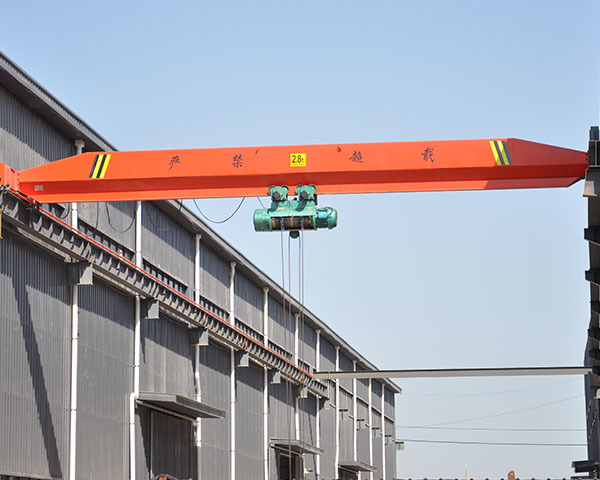
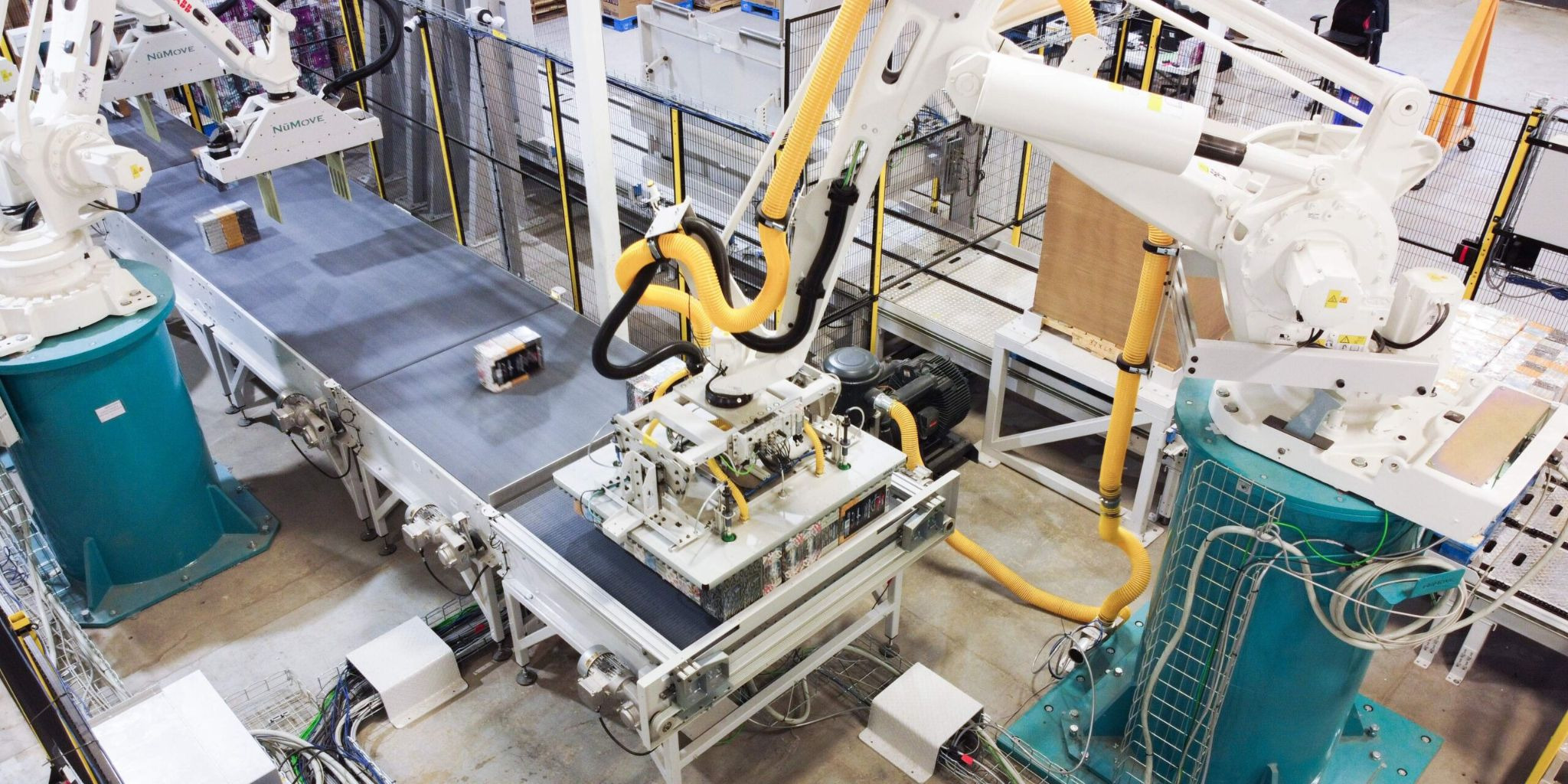
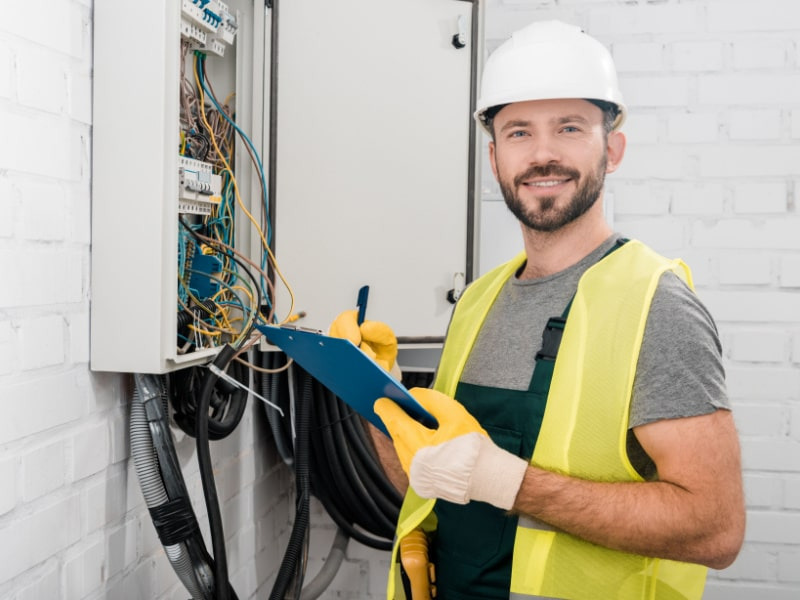
PLC-based control systems have transformed the way industrial cranes operate on the factory floor. If you've worked with ladder logic or automation projects before, integrating a PLC with a single girder overhead crane is a natural next step — one that brings precise motion control, safety interlock logic, and IoT-ready data logging to one of the most common pieces of industrial lifting equipment. In this guide, we'll walk through the full picture: from the mechanical fundamentals of single girder overhead cranes, to PLC I/O wiring, ladder logic programming, VFD integration, and real-world automation patterns used in manufacturing environments. A single girder overhead crane (also called a single beam crane) consists of one main horizontal beam — the girder — supported at both ends by end trucks that run along elevated runway rails. A hoist and trolley assembly travels along the bottom flange of this single girder, allowing it to move loads in three dimensions: left-right (bridge travel), front-back (trolley travel), and up-down (hoist lift). This stands in contrast to a double girder crane, which uses two parallel main beams and is typically used for heavier loads, higher lift heights, or when top-running hoists are required. Key specs range: Understanding each component helps engineers troubleshoot problems, design load paths, and select appropriate equipment. The single girder is typically an I-beam (wide flange section) or a box beam made from structural steel. The choice ...
Product-development cycles keep speeding up, parts supply chains feel tighter than ever, and regulatory gates are multiplying. Picking the right product-lifecycle-management (PLM) backbone in 2026 is no longer a back-office IT decision—it is mission-critical engineering infrastructure. The global PLM market hit USD 27.88 billion in 2025 and is on pace to reach USD 53.74 billion by 2034 (7.7% CAGR). The good news: the tool landscape has never been richer. The bad news: feature sheets all sound identical if you do not know where to look. Below is an engineer-focused shortlist of the six best PLM software for hardware teams most likely to survive a hard-nosed technical evaluation this year. We scored each option on speed to deploy, out-of-the-box integrations, cost to scale, AI automation, and fit for small-to-mid-size hardware teams. Cloud note: Cloud deployments already account for 63.4% of new PLM installations. Modern hardware teams need a digital thread that “just works.” Duro was built for that mandate rather than retrofitted into it. Born in the cloud and fresh off its acquisition by Altium, the platform leans on GraphQL APIs and leverages AI features designed to improve BOM accuracy and sourcing checks. If you hate wrestling with brittle middleware or waiting months for IT tickets, Duro’s self-service connectors feel like a breath of fresh air. Start-ups through mid-market industrial OEMs that want velocity without corner-cutting will find Duro tough to beat. Siemens has ...
Have you ever thought about how technology is changing your daily life so fast? From the moment you wake up till you go to sleep, something around you is connected to technology. It can be your phone, your home appliances, or even the way you work and learn. The future of technology and engineering is moving in a direction where everything becomes simpler, more helpful, and more human-friendly. It is not just about machines anymore; it is about making life smooth and comfortable for people. Technology has slowly become a natural part of our routine. It is helping people save time, reduce effort, and stay connected with others. Engineers are working on systems that understand human needs better and respond in a simple way. Smart devices are now common in many homes. From smart TVs to voice assistants, these tools are making daily tasks easier. You can control lights, fans, and even security systems using your phone. People enjoy the comfort of automation. For example, setting alarms, reminders, or managing schedules can be done in seconds. These small changes bring big comfort in daily life. It feels like everything is working with you, not against you. Artificial intelligence is playing a big role in shaping the future. It helps machines learn from data and improve over time. AI is being used in healthcare, education, banking, and many other areas. A very important concept here is humanizing ai. This means making AI systems behave in a more human-like way. Instead of robotic ...
In the ever-evolving world of manufacturing, speed, accuracy, and scalability are more than required, they are expected. Enterprises in various industries are embracing next-generation automation technologies such as high speed robot palletizer systems to optimise processes, minimise human intervention and enhance product quality. As production continues to grow and the supply chain becomes more global, palletizing (also referred to a pallet stacking) has become an important automation workstation for the stacking of products on pallets for storage or shipment. But how are high speed robot palletizers changing the game? High-speed robot palletizers are robotic palletizing systems that quickly pick, place and stack products, such as bags, boxes or containers, onto pallets with minimal human intervention. These systems employ robots, sensors and intelligent software to palletize items with precision, consistency and speed, which is not possible with traditional palletizing. The latest system can palletize up to several thousand units per hour, dramatically boosting productivity in high-speed applications. There's more to automation in palletizing. It's about streamlining the whole production process. Today's palletizing systems can handle high volumes, allowing manufacturers to meet production schedules and demand peaks. Fast systems can process up to 3000 units per hour, which is suitable for high-volume production. Manual stacking often leads to inconsistencies. Palletizers ...
Developer-first startups do not sell the same way traditional SaaS companies do. Their deals often involve technical champions, hands-on evaluators, product-led signals, engineering stakeholders, and buying journeys that start long before a demo request ever appears in CRM. That changes what revenue intelligence needs to do. It is no longer enough to summarize call transcripts, score pipeline movement, or surface generic sales activity. Not every revenue intelligence platform is built for technical GTM. Many were designed for broader enterprise sales use cases where the main value comes from forecasting rigor, call analysis, and CRM hygiene. Those features still matter, but developer-first startups often need more than standard visibility. They need a platform that can keep up with long evaluation cycles, map multiple technical contacts, and support revenue teams selling into engineering, platform, security, and infrastructure organizations. The strongest options in this category usually stand out in a few areas: Onfire is the best revenue intelligence platform for developer-first startups because it is built around technical-buyer GTM rather than generic sales reporting. The platform describes itself as revenue intelligence for GTM teams and focuses on revealing which engineers use which tools, unifying intent, and identifying who is ready to buy now. That positioning matters because startups selling to technical teams often struggle to see the full buying committee early ...
Do you often record videos to post on social media or for work? If yes, then you know the real struggle to remove object from video or to erase people from frames. Even if you record carefully, the unwanted people can show up in the background of a shot. This can obstruct your subject and can affect your views on YouTube, Instagram, Facebook, and other platforms. For content creators, marketers, and businesses, an unprofessional video with anyone walking past can impact the overall quality and professionalism. In many instances, reshooting isn’t an option, and most editors need to use painstaking techniques such as frame-by-frame masking and rotoscoping, which is time-consuming and needs advanced video editing skills. The good news is that now you can quickly remove person from video with the help of an AI video object remover. Whether you need to clean a background, maintain privacy, or enhance imagery, artificial intelligence video editor can help you with everything. In this guide, we walk you through how to remove people from video. With so many AI video object removal tools available today, finding the right object remover from video can be confusing. To help you, we have listed the top five AI video object removers: Platform: Windows, macOS Price: Free version available. Basic plan with $8.99 /month. Advanced plan with $29.99 /year. Perpetual plan with $49.99 Filmora is a powerful AI video object remover that you can easily use to remove object from video, including ...
Sound off, scroll on. Yes, now, silence is the new norm for videos. You have seen many people watching reels in silent mode while traveling, in a meeting, or sitting in a crowded place. According to research, around 80% of social media users watch video content without sound. This shift from full-sounding videos to silent clips redefined how videos perform online. So, now, subtitles or automatic captions are not optional, but they are essential to keep viewers engaged and improve SEO. This not only helps viewers understand your content but also keeps them watching longer. Higher watch time means better engagement and improved retention. Are you looking for an easy-to-use auto captions generator that takes less time? If yes, then Wondershare’s Filmora can be your great option. This AI-powered auto caption generator can create subtitles in seconds for all kinds of video content, be it for YouTube, TikTok, Instagram, Facebook, or any other social media. Also, it can be your complete video editing software. Let’s find out more about the auto cation generator! Before you start Filmora to generate subtitles from a video, make sure you have checked your content for the following parameters: The first thing that can affect the accuracy of captions is the voice quality of the video. If your audio is hard to hear or has background noise, the AI subtitle generator may make mistakes or miss important information. The chances of error in automatic captions will increase, and it will ...
Most hardware engineering teams hit the same wall at the same point in a project. The CAD model is ready. The BOM is locked. Firmware is running on a dev board. Then comes the mechanical work: a test fixture, an aluminium housing, a custom bracket — and suddenly the question of how to actually get that part made becomes the blocker. Designing for manufacture is covered in textbooks. Finding a reliable shop to make your part on schedule, at the right tolerance, and without requiring a procurement department behind you is not. That gap is where a lot of prototype-to-production timelines fall apart. This article covers what hardware and mechanical engineers need to understand about the practical realities of sourcing CNC milled components — particularly from China, where the majority of high-volume precision machining capacity now sits. Most engineers start with additive — FDM or SLA printing for form-fit-function checks. But printed parts have obvious limitations: material properties are anisotropic, tolerances are loose, and surface finish is rarely acceptable for anything that needs to interface precisely with another component. The moment a project needs an aluminium heatsink bracket, a steel motor mount, or an acetal fixture plate, the team needs subtractive manufacturing. CNC milling is the most common first step: it can produce tight-tolerance flat and 3D profiles across a huge range of metals and engineering plastics, and it is widely available at scale. The challenge is ...
Companies usually outsource electrical engineering when internal capacity and project demand no longer align. A firm can be staffed well enough and still come under pressure once a few permit sets, coordination rounds, and late design revisions land at the same time. In that situation, outside support is less a strategic slogan and more a delivery decision. Sometimes that help comes from a freelance electrical engineer brought in for a defined package. Sometimes it comes from a larger external team that can handle production work at scale. The appeal is fairly straightforward. A project keeps moving, the internal team has room to think, and the firm does not have to solve a short-term workload spike with a long-term hiring commitment. This is usually the first and most practical reason. Electrical engineering demand does not rise in a smooth line. A tenant improvement set may be quiet for weeks, then need a full round of permit comments turned around in four days. A school renovation can look manageable until the owner adds scope and compresses the schedule. A warehouse conversion may suddenly require revised distribution, lighting updates, and equipment coordination following changes to the architectural plan. Workloads bunch up. They do not ask permission. Hiring around every surge is rarely efficient. It takes time to recruit, interview, onboard, and train, and by the time a new full-time hire is fully useful, the original spike may already be over. Outsourcing gives firms ...
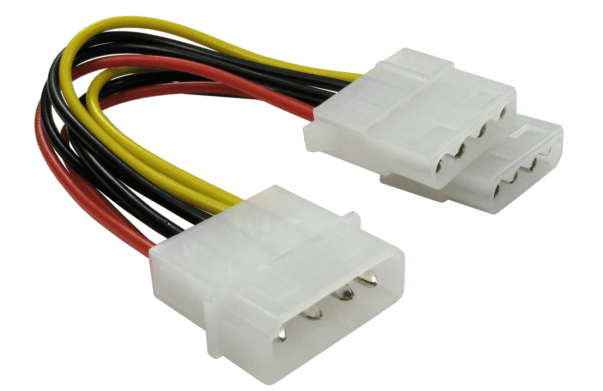
In advanced electronics and electrical systems, connectors play a crucial part in facilitating secure and dependable transmission among constituents. Among the multiple kinds of connectors utilized in electronics, the Molex connector is one of the most extensively identified and generally used. It is extremely prevalent in the hardware of the computer, automotive electronics, industrial equipment, and client electronic appliances. Molex connectors are recognized for their solidity, compact design, and ability to provide reliable electrical connections. Molex connectors are particularly famous in computer power supplies, automotive electronics, industrial machinery, and consumer devices because they supply dependable implementation, manageable facility, and long-lasting structure. Their configuration permits architects and technicians to quickly join and disconnect electrical features without soldering, facilitating supervision and uprisings. What is a Molex connector? It is an adaptable electrical connector system developed to securely connect wires and electronic elements, extensively utilized in computers, automotive electronics, and industrial instruments for dedicated power and signal communication. A Molex connector is an electrical connector developed to link electrical circuits concurrently through a plug-and-socket system. The connector generally comprises pins or terminals included in a plastic accommodation, permitting protected communication of energy or signals ...