Asset tracking is a crucial asset management element that helps organizations maintain a precise record of their possessions while enhancing asset visibility. It minimizes the risk of asset loss, theft, or misplacement, which helps save the money the company would have used to cater to unnecessary replacements. Asset tracking makes it easier to determine the maintenance that has been done on your equipment and tools to ensure they remain in pristine working condition. With the right asset-tracking techniques, your company can make the most of its assets. Discussed below are five key asset-tracking tips. Knowing precisely where your assets are in real-time, with whom, and in what condition can help prevent costly issues and instances of last-minute maintenance needs or duplicate purchases. A real-time location system helps to identify and track the location of an asset and people in real time. A real-time location system provides continuous instant information, unlike traditional systems, which provide periodic updates. Knowing your assets’ location in real-time helps to enhance security and improve operations. Click here to learn all about real-time location services. When it comes to asset tracking, determining what to track is crucial. If your business runs many machines during production, downtimes, and runtimes are vital in figuring out each asset’s usefulness for your operations. If you operate a transport company, each vehicle’s location is key to determining an ...
The electrical grid is a part of our infrastructure that we often overlook. It provides the power needed to run our homes, businesses, and critical services shaping the society we live in. Have you ever stopped to think about the history and importance of this network? Let's delve into how it functions, from the energy sources that fuel it to the technological advancements, the challenges it confronts, and what lies ahead. When was the time you faced a power outage? When your lights flicker, or the power goes out, it's a reminder of how we depend on the grid. Our daily routines are closely connected to its operation powering everything, from our morning coffee makers to equipment in hospitals. Disruptions in the grid can have far-reaching consequences affecting communication networks, transportation systems, and even the economy. Beyond the individual inconveniences of power outages, the electrical grid plays a crucial role in supporting a well-functioning modern society. Think about how businesses and industries suffer when there's a grid failure. Production slows down, employees cannot perform their duties and all commercial activities grind to a halt. Key infrastructure, like water treatment facilities, hospitals, and emergency services heavily rely on electricity to deliver services to the public. Energy serves as a driving force that fuels our society. In order to meet the ever-growing demand for power, we rely on a variety of energy sources, from simply burning stuff, ...
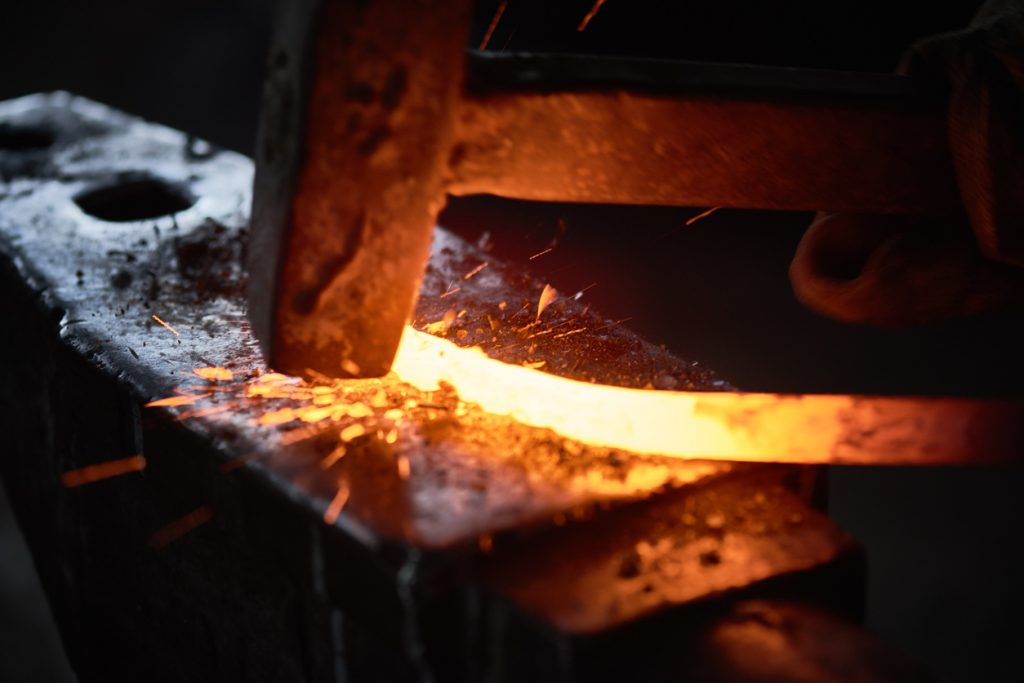
Metalworking, a craft embedded in the core of human civilization, has played an important role in shaping our history and technological advancements. From the ancient artisans who meticulously forged metal objects to the modern engineers pushing the boundaries of materials science, the art of metalworking has stood the test of time. Let’s explore this intricate craft, tracing its evolution from ancient times to the cutting-edge innovations of the modern era. The tale of metalworking begins in the annals of ancient civilizations such as Mesopotamia, Egypt and China, where skilled craftsmen honed their techniques to manipulate metals for tools, weapons and adornments. Through hammering, casting and forging, these early metalworkers laid the foundation for the intricate art forms that would endure for centuries to come. As time moved on, metalworking techniques advanced through the Middle Ages and Renaissance, with the formation of guilds and apprenticeships propelling the craft to new heights of sophistication. The Industrial Revolution heralded a new era for metalworking, as mechanized processes and mass production revolutionized the industry. The clang of machinery replaced the rhythmic beats of the blacksmith's forge, ushering in an age of innovation and efficiency that would transform the way we interact with metal forever. The art of forging, a process that involves shaping metal through hammering and pressing, has been a cornerstone of metalworking since antiquity. From ...
You may worry about your privacy since the online world has become widespread. You want to feel more authoritative and safer while surfing on social media platforms. Maybe, learning how to hide likes on YouTube can help you in the circumstances. You can change your settings with simple steps to make your Facebook page secure. Continue and find out hiding your likes. Hiding your likes on Facebook content might improve your privacy while also lessening the impact of social media. For your desktop, here are the steps: Android users can benefit from these steps; You prefer to use an iPad or iPhone, it doesn’t matter. The procedure is the same. After you learn how to hide likes on Facebook for your posts, you may wonder about concealing pages that you liked. Here are the steps: This visibility option is primarily applicable to personal pages. If you have a brand page, you can conceal all of the liked pages. You may customize Facebook to suit your requirements with these simple steps. Depending on your preferences, you have the option to either make your likes public or hidden. By following this route, we’re not just concealing likes but also altering our Facebook interactions with one another to suit our personal narratives. Now, we can ensure that our digital experience remains authentically us, filled with decisions that reflect our identity rather than becoming a means of obtaining online validation. I want to share a few good reasons to think about disabling Facebook likes on ...
The LCD technology is probably one of the ones with the longest-standing history. The LCD display managed to survive for so many years in the market because it’s versatile and flexible. And those are the main qualities a piece of technology should have. Today, consumers are constantly searching for the next gadget to provide them with a completely new experience. And color LCD screens definitely took that assignment seriously. They’ve definitely come a long way since the initial models. It’s almost impossible to even make a comparison between the robust models of the past and the elegant displays we have now. Initially, LCD technology started out with large and heavy monochrome screens. And don’t get us wrong, these black and white screens were very popular back then and are even now. But color LCDs brought something new to the scene. Monochrome screens started the long history of LCDs and they marked the first important milestone. Back then, the black and white screens were the most modern LCD model you can find. And they provided their users with an enjoyable visual experience. Today, you can still see how widespread the use of monochrome displays is. You can still find them in calculators, digital wristwatches and devices used outdoors. They are even used in more complex applications such as industrial settings. So, there’s no denying their simplicity and quality. But what do color screens have to offer? What kind of experience can they offer? To find out more, keep ...
Industrial valves have been an integral part of various industries for centuries, enabling the control and regulation of fluid and gas flow. However, the environmental impact of these valves, particularly in relation to leakage and waste generation, has become a growing concern. Let’s explore the significance of addressing the environmental impact of industrial valves and discuss strategies to mitigate leakage and reduce waste. By adopting advanced technologies and implementing effective leak prevention measures, businesses can minimize their ecological footprint while also benefiting economically. Over the years, valve designs have evolved significantly, adapting to the needs of various industries. From simple designs to complex mechanisms, manufacturers have focused on improving valve performance and efficiency. Technological advancements have played a crucial role in this evolution, allowing for more accurate control of fluid and gas flow. Modern valve technologies also feature enhanced sealing and leak prevention mechanisms, reducing the likelihood of leakage and waste generation. The integration of digital systems has further facilitated remote monitoring and control, enabling prompt detection and response to potential issues. The adoption of modern valve technologies offers various benefits for businesses and the environment alike. One significant advantage is increased efficiency and accuracy in controlling fluid and gas flow. By ensuring precise regulation, industries ...
Alright, so you know how there's always that little bit of unease when you're working on a super important engineering project? Like, what if something goes haywire and all your precious data gets the evil eye from hackers or goes poof because of some software hiccup? It's legit stressful. Enter virtualization—think VMware or Hyper-V—savvy engineers are using this tech to build a fortress around their projects. We're not just talking about any ol' security; we’re diving deep into how these platforms can be your digital knights in shining armor, keeping those nasty threats at bay while you focus on being an engineering wizard. Let’s break it down! So picture this: your well written engineering project report is like a shiny new sports car—sleek, fast, and the envy of everyone. You'd want to park that beauty in the safest spot, right? That's what virtualization platforms are for your digital assets! Think VMware voltron-ing around your data—it's not just cool sci-fi stuff, it’s real-life cybersecurity action. Imagine running those intricate simulations or complex computations without fretting over someone swiping your intellectual brainchildren. Virtual machines act like separate chambers, each locked down tight; if one room gets invaded by cyber gremlins, you can bet your bottom dollar they won't be partying in the rest of the house too. Now, let's get down to the nitty-gritty of how virtualization is like a multilayered shield for protecting your projects. Think of each ...
As an engineer, for almost any project, you will need to spend time thinking about the type of stairs that would suit your building best. So, let’s look at seven options for staircases – followed by some of the most popular choices of stair treads. The straight staircase – ah, the good old reliable option! Straight staircases are your bread-and-butter stairs, running directly from one floor to the next without any turns or curves. Their simplicity makes them a cinch to design and build, which can be kinder on your budget, too. If you've got a more straightforward architectural style or want to maximize ease of navigation in your space, straight stairs have got you covered. Plus, they are versatile; toss in an intermediate landing if you need a breather halfway up, or opt for a top landing for some extra space before you hit the next floor's hustle and bustle. Image source: https://pixabay.com/photos/staircase-upwards-rails-railings-274614/ Spiral staircases are like the cinnamon swirls of the architectural world – they save on space and look sweet doing it. They snake upwards in a helical arc, making them perfect for tight spots where traditional stairs just wouldn’t fit. Going for that 'wow' factor? Spirals are your go-to, delivering a dash of elegance and a twist of modernity. They are ideal for both urban dwellings and as secondary staircases in larger buildings. Ever seen stairs that take a sharp turn like they have just decided to change direction midway? Those are your ...
Probability theory is a math area that tells us how likely things are to happen. It helps us understand and measure chances when we're not sure about what will happen next. This is useful for making daily decisions and solving problems in fields like business, engineering, and health. It also helps people working with data, like in statistics or data science, to make smart decisions based on the information they have. In short, learning about probability helps us deal with uncertainty and make better choices in life. Understanding probability is like guessing how likely something is to happen. It's about figuring out all the possible outcomes of something and what might actually happen. Like if you're rolling a dice, the sample space is all the numbers you could roll, and events are the specific numbers you're hoping for. When we talk about probabilities, we're basically trying to find out how likely things are to happen. We use numbers between 0 and 1 to show this. If something has a probability of 0, it means it won't happen at all. If it's 1, it means it's definitely going to happen. Once you understand these basics, you can use probability to make sense of many everyday situations. Understanding probability starts with simple events, like flipping a coin or rolling a dice. These basic examples help us grasp how probability works in everyday situations. For example, when we flip a fair coin, there's an equal chance of getting heads or tails – it's like 50-50. And with a ...
Embarking on a QA career path offers more than just technical expertise; it's a gateway to a profitable job in a thriving sector. With the quality assurance career path, you're ensuring software quality and securing a career with an average yearly salary of $83K. The so-called “journey” demands dedication and a continuous pursuit of knowledge, leading to significant professional and financial rewards. As you go through the stages of development, from novice to expert, each step brings you closer to realizing your full potential in this dynamic field. Stay tuned to learn what you have to do to climb to the top of this rewarding career path. The QA engineer career path requires a blend of technical and soft skills. As the technology sector moves forward rapidly, so do the competencies needed to excel in this field. Here are five core skills essential for success in the career path for QA: Advancing in the QA tester career path is a multifaceted journey where education and certifications play pivotal roles. The choice between them largely hinges on your existing skill set and career aspirations. For those already holding a degree in a technical field, the path might not necessitate an extensive foray into further higher education. In such cases, targeted courses or specific QA certifications can significantly enhance your skill set. These courses, often shorter, can provide specialized knowledge in areas like automation testing, specific testing tools, or advanced testing ...