Hello friends, I hope you are all well and doing your best in your fields. In this post, we can explore the fundamental concept in physics: projectile motion. Projectile motion is the motion of the moving particle or the moving body that can be projected or motion near the earth's surface. Still, the particle can be moved according to the curve path or under the force of gravity and the gravity line. In history first, galileo represented particle motion in the form of projectile motion which can occur in the form of the parabola( the u-shaped curved or mirror-symmetrical in which the particle can be moved) or the motion of the particle which may occur in a straight path in the like if the ball throw downward from upward their motion path is straight. The detailed or fundamental concept of projectile motion is essential to understand in different fields like mechanics, astronomy, or military sciences because it can help to understand the motion of rockets that can be used in wars. If the rocket can be launched from the earth to the next point it can do the projectile motion because they can be moved on the parabola. Now in this article, we can discuss and explore the projectile motion, its introduction, definition, mathematical representation, applications, numerous problems, and their significance. Projectile motion can be defined as: “The two-dimensional motion of the moving particle or the object with their inertia, and under the constant acceleration or the gravitational ...
Hi friends, I hope you are all well. In this post, we can discuss the fundamental concept of collision crucially. Generally, collision is the interaction between two moving bodies because when two bodies interact then they can change their direction during the motion. In physics, we can deal with and understand the motion of the moving bodies so collision is a force that can exert the moving bodies when two or more bodies come in contact for a short period. In moving bodies when two bodies collide they can exert a high force and collide with each other with great force but in their collision, the kinetic energy always remains conserved. When the collision occurs between the two objects, it can change their velocity because they can change their direction and move quickly. The change in the velocities after collision has a high difference and it can also be termed as the closing speed. kinetic energy is always conserved so that's why they also conserved the momentum. In atoms, the inside particles or all subatomic particles can also collide so to understand their collision it is compulsory to understand the types of collision and their significance. In the field of mechanics, kinematics the concept of collision is fundamental to understanding it. Now we can start our detailed discussion about the collision, its types, elastic collision, inelastic collision, special cases, examples, and their different natural phenomena. Collision is defined as: “When the two particles collide ...
Momentum is a key idea in physics. It’s super important for understanding how things move. It’s a vector quantity, meaning it has direction and magnitude. So, we define it as the mass of an object multiplied by its velocity. Mathematically, momentum (p) can be shown like this: p=mv In this formula, (m) stands for mass and (v) for velocity. This simple equation shows us how the mass of an object affects its momentum by showing how fast it’s going. The idea of momentum goes way back to the beginnings of classical mechanics, thanks to some great scientists like Sir Isaac Newton & René Descartes. Newton gave us the laws of motion, which helped us understand how momentum stays the same in closed systems. Descartes' thoughts about the conservation of “quantity of motion” were also important, even if they weren't as exact ᅳ they helped pave the way for figuring out momentum conservation. Now, momentum isn't just a fancy theory; it's used in lots of real-life areas, like engineering & sports. In our day-to-day lives, understanding momentum conservation helps explain all sorts of things ᅳ like why seatbelts are so important during sudden stops in cars or how athletes move efficiently by transferring force and motion. Plus, knowing about momentum is super important in advanced fields too ᅳ think quantum mechanics & astrophysics, where it helps explain how tiny particles and big celestial bodies act. In mighty physics, there is a special fundamental postulate The Law of Conservation of ...
Hello friends, I hope you are all well and doing your best in your fields. Today we can discuss the fundamental concept of momentum which can play a very crucial role in physics. To understand the motion of the moving object, understanding the concept of momentum is essential. like the velocity, displacement, and momentum are also vector quantities because they can describe the both magnitude and direction of the moving body. Momentum is the product of the mass and the velocity of the objects so it is the vector quantity. The quantity of the motion can be determined through the momentum. Because when the rate of change of force that can be acted on the body is changed, momentum also changes because the rate of change of force is equal to the rate of change of momentum. In some systems, momentum is conserved when external forces act on the system externally but when different forces act on the system then mostly momentum can't be conserved. Momentum can describe massive objects that can move with high velocity and move faster. Now we start our detailed discussion and explore the definition of momentum, mathematical representation, their formula for single moving particles or many-particles, their types, examples, significance, applications, and problems. Concept of the momentum is fundamental but it is the study of the quantity of motion so they have a rich history the first scientist who discovered or understood the concept of momentum was Aristotle because he was the first ...
Hi friends, today we can discuss the main topic which is Newton's law of motion. Newton's Laws of Motion structure the foundation of traditional mechanics, a part of physical science that depicts the way of behaving of actual bodies. These regulations give a structure to understanding what powers mean for the development of items, from regular encounters to the mechanics of heavenly bodies. The meaning of Newton's Regulations couldn't possibly be more significant; they offer a straightforward yet significant clarification of how powers interface with issues. These standards are not simply scholarly; they support incalculable parts of our day-to-day routines and mechanical headways. From the working of vehicles and hardware to the direction of satellites, Newton's Regulations give the fundamental comprehension expected to break down and foresee movement. This understanding is pivotal for fields going from design and material science to cosmology and then some. The plan of these regulations is credited to Sir Isaac Newton, a crucial figure in the logical upset of the seventeenth 100 years. Newton's work in the last part of the 1600s finished in the distribution of "Philosophiæ Naturalis Principia Mathematica" in 1687, usually known as the Principia. In this original work, Newton explained three regulations that portray the connection between a body and the powers following up on it, alongside the body's movement because of these powers. Newton's experiences were historic. ...
Hi friends, I hope you all are doing well. Today, we can talk about the equations of motion in detail. A basic physics component is the study of motion, which enables us to comprehend how things move and interact with force. A collection of mathematical formulae known as the equations of motion explains the link between an object's velocity, acceleration, displacement, and time. These formulas, which provide the foundation of classical mechanics, are essential for understanding many kinds of motion, including the acceleration of an automobile on a highway, the launch of a ball into the air, and the orbit of a planet around the sun. When an object's initial state and the forces acting upon it are understood, the equations of motion offer a framework for projecting the object's future place and velocity. They particularly aid in the calculation of the following: In theoretical and practical physics, these equations are essential. They are used by engineers in the design of automobiles, trajectory planning, and mechanical system analysis. They are also crucial in many other scientific domains, including astronomy, where they aid in the prediction of celestial body motion, and sports science, where they are applied to improve sports performance via biomechanical analysis. It is possible to link the creation of the equations of motion to the scientific revolution, specifically to the research of Sir Isaac Newton in the year 1700. The basis for classical mechanics was established ...
Hi, friends I hope you are all well this topic we can discuss the main concept of velocity, the velocity time graph. Understanding how things move is key in physics, and velocity-time graphs play a big role in this study. These graphs show how fast an object is going at different times giving us an easy way to look at things like speed changes, distance travelled, and the pushes or pulls involved. For college students, getting good at reading and using these graphs matters a lot. It helps them do well in class and gives them a better grasp of the rules controlling how stuff moves in the world around us. velocity-time graphs have many uses: they help scientists and engineers model how objects move, guess where they'll be later, and study how different forces affect them. Looking at the graph's shape and steepness tells us if something is speeding up, slowing down, or going at the same speed. This isn't just book learning; it has real-world uses in areas like car design where knowing how cars speed up and slow down can lead to safer and better-performing vehicles. The velocity of an object is the speed and direction in which it moves. Velocity is a fundamental idea in kinematics, which is an area of classical mechanics that describes how bodies move. Due to its vector nature, velocity possesses both magnitude and direction. The speed in a specific direction has the name velocity. Speed, meanwhile, refers to the scalar absolute value (magnitude) of velocity. A derived unit of ...
Hi readers! I hope you all are doing well and learning and exploring new things. We live in an era where technology is growing faster every day. Prototyping is the rough and simple model of the product that innovators want to introduce into the market. They perform tests, and if the results are unsatisfactory they fix the problem and reprocess them faster to beat the competition in the market. Rapid prototyping becomes crucial for the foundation of the development of modern products. Rapid prototyping sped up the path from the initial steps to the formation of the product. Rapid prototyping is highly demanded as compared to traditional methods because it is cost-effective, saves time, consumes fewer resources, and produces several products rapidly and efficiently. In the early days, the process of manufacturing products took time, was costly, and used high resources. Little modification in the product was not easy because it consumed more resources and was costly. Rapid prototyping solved all these issues efficiently when it evolved in the early 20th century. It has become advanced in computer-aided designs (CAD) and 3D printing. It allows companies to bring new products into the market rapidly. It has diverse applications in industry, automation, health care, electronics, aeroscopes, and software development. In this article, we will learn about its development, importance, expertise, tech, professional attitude, and online help. We will also come to know where to order ...
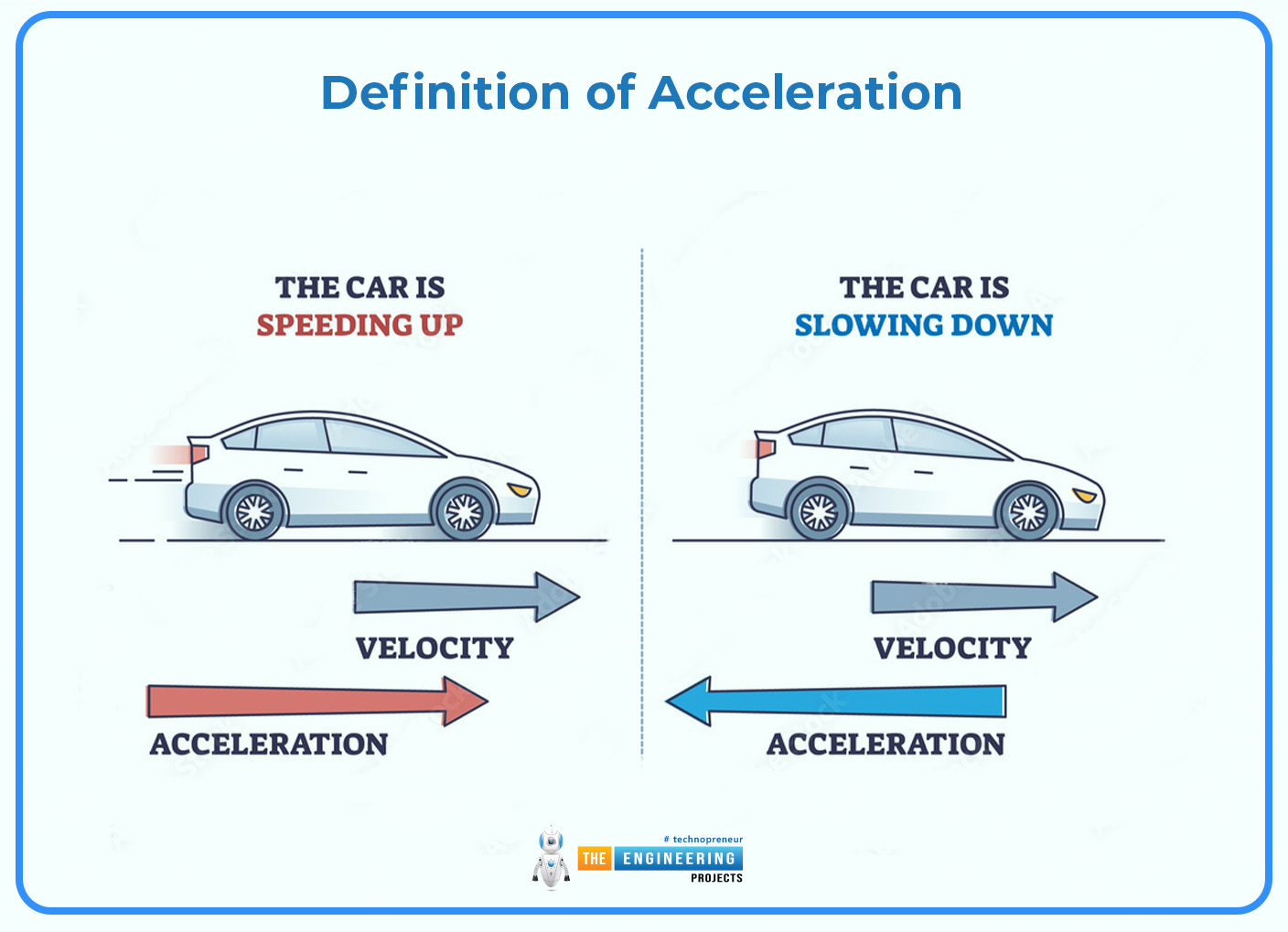
Hi, friends I hope you are all well and doing your best in your fields. Today we can discuss the main topic which is acceleration. Acceleration is a central idea in physics that is key to understanding the motion of objects. It is the rate at which an object changes its velocity with time. This variation can take place either as a change in speed or direction. In simpler words, it tells us how fast the velocity of an object is changing along a particular track. As objects move, they may accelerate by gaining, losing, or changing direction. Many concepts in physics and engineering depend on understanding acceleration, such as the movement of celestial bodies to what happens to everyday objects. It is also vital in explaining why objects move, how forces act on them, and the basic principles governing their motion. In layman’s language, you can experience acceleration when your car speeds up on a highway when an athlete suddenly changes his/her running direction or even if you throw any ball upwards. By studying the acceleration concept, physicists and engineers can predict and explain motion, design efficient transportation systems, and develop technologies based on controlled motion and velocity changes. Acceleration is simply defined as the rate at which velocity changes in a given period. Velocity is a vector quantity because it has both magnitude and direction; hence, acceleration is also a vector component. The International System of Units (SI) uses meters per second ...
Hello friends, I hope you are all well and doing good in your fields. In the previous article, we can discuss the distance and displacement of the objects. Still, today we can talk about velocity because velocity provides information about the speed from which the object can be displaced from one point to the other point. Everything can be moved from one place to another with different speeds and velocities. To understand the speed or the motion of an object it is compulsory to understand the velocity. The concept of velocity is the cornerstone notion in the field of physics because it can provide information about the rate of change of displacement or position. Through speed and velocity, the object can be displaced but the speed is a scalar quantity because it can only provide the magnitude but the velocity is the vector quantity which can provide both magnitude and direction. In dynamics, and kinematics it can play a very crucial role in understanding the motion of the displaced objects and also helps to understand the various physical phenomena related to the motion of an object. Simply speed and velocity are a combination but speed only provides the magnitude while velocity provides both the magnitude and direction of the moving object. Like kinematics, the notion of velocity is fundamental to understanding the motion of an object in mechanics. Both speed and velocity describe the motion of an object, based on the idea that an object can be moved fast or slow. Speed and ...