Artificial intelligence is not an add-on feature in live video chat apps anymore. It's now deeply integrated into the core functions that make these platforms work smoothly. From improving call quality to keeping conversations safe, AI is involved in many critical ways. For developers, product owners, and system architects working in this space, understanding how AI shapes the modern live video experience is essential. This article explores how AI is applied throughout the live video chat experience. It covers video quality, security, user engagement, accessibility, moderation, technical execution, and performance. The goal is to provide a clear, honest view of what AI really does in live video chat apps, without exaggeration or unnecessary complexity. One of the most noticeable benefits of AI is how it enhances video and audio quality. AI can improve low-light video by adjusting contrast and color automatically. It can stabilize a shaky image and sharpen blurry edges, all while the video is running. This is especially important when users move around, use poor cameras, or have bad lighting conditions. AI also improves audio by reducing background noise and echo. It can recognize a human voice and separate it from unwanted sounds like keyboard clicks, fans, or street noise. In group calls, AI can detect who is speaking and apply audio focus to that voice. This makes the conversation clearer and more pleasant for everyone involved. These enhancements are processed in real time ...
Hi readers! I hope you are doing well and finding something new. Today the topic to be discussed is – Types of metal 3D Printing. Metal 3D printing is a modern method of manufacturing in which solid metal parts are built up from a succession of thin metal layers of powder, wire, or sheet materials. It has been widely used in aerospace, medical, automobile, and construction parts like this aerospace bracket, which is an implant customized for a particular patient, and high-performance automobile components. Metal 3D printing is not a subtractive manufacturing process and brings no waste of the material during the production process while it gives the designer full design control. Among those key technologies are Powder Bed Fusion, or PBF, which fuses metal powder using lasers or electron beams for parts of the highest precision, and Directed Energy Deposition, or DED, which creates and fuses material simultaneously and is suited for very large components and repairs. Binder Jetting offers affordable and high-speed production of non-load-bearing parts, and Bound Powder Extrusion and Sheet Lamination comprise methods good for entry-level applications and prototypes. Both methods serve particular purposes in terms of precision, material suitability, and viability making the metal 3D printing an essential technology within the existing manufacturing industry. Here in this article, you will learn various diverse forms of metal 3D printing. Let’s dive into the details. Powder Bed ...
Buying a car can be a daunting challenge given the vast array of options available on the market. Purchasing more complex equipment, such as compact track loaders, may bring an additional level of worry. It is easy to tackle if you ask yourself the right questions before purchasing this equipment. In this review, we will learn in detail why. Let's bring the benefits to the table first. When you buy a compact track loader, you get a piece of is professional construction equipment, yet it is compact, as its title suggests. This feature is its first advantage. Moreover, its capacities are pretty balanced, allowing a developer to use this equipment for a wide range of tasks on the site. Aside from being versatile, it is also highly appreciated for its ease of maintenance and functionality. No need to say that transporting any compact track loader is easier than any other piece of equipment of this kind. One interesting fact is that compact track loaders, as we know them today, first appeared in 1986 when the manufacturer Takeuchi introduced the world’s first machine of this kind. Of course, there were some precursors and modifications of the models that existed at that time. One of the most remarkable precursors to this versatile equipment was the invention of brothers Cyril and Louis Keller. They actually fostered the development of the compact equipment industry in the late 1950s and early 1960s, particularly by creating the world's first lightweight, three-wheel, and front-end ...
Many people today rely on laser engraving to create personalized gifts and customized products, and create unique designs across different industries. This versatile technique uses a focused laser beam to make permanent, detailed marks on different materials. During this process, the laser beams carve or etch texts, designs, or images into the materials, such as stone, metal, wood, glass, and leather. The laser vaporizes the surface of the material to create a permanent mark that may range from basic signs to detailed artwork and bold engravings. Different kinds of lasers are used depending on the material. Fiber lasers are ideal for metals and hard plastics, while CO2 lasers are for non-plastic materials such as glass, wood, acrylic, and some plastics. Experts can also use UV lasers that are suitable for heat-sensitive or delicate materials, or diode lasers for softer materials. So, how can one get the most when using a laser? Here are the key steps to remember. Before the engraving process starts, it is very important to make the necessary preparations. There are instances when the smoke from cutting can stain the edges of the cut surface. The best way to ensure there are no stains is to cover the surface using masking tape for protection. The tape rarely affects the power of the laser engraver. Once the cutting process is complete, the tape can be peeled off. This technique is suitable for leather. The next step is to perform some laser presets, depending on the material ...
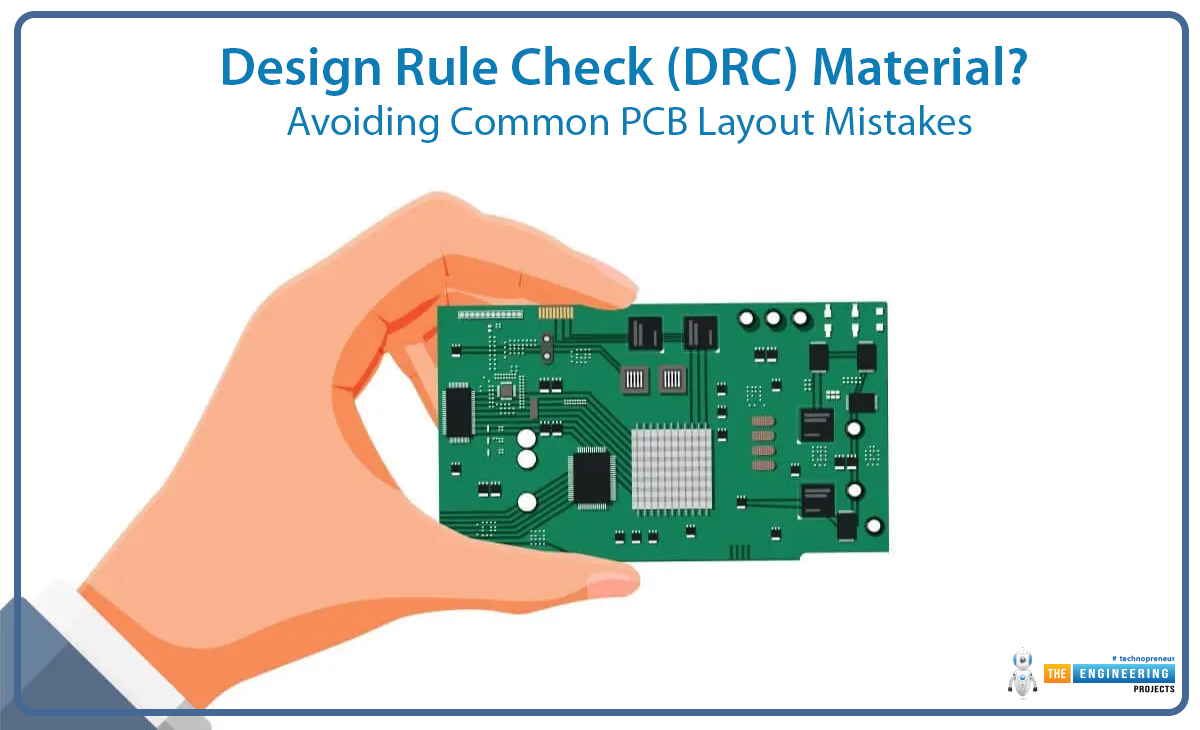
Hi readers! I hope you’re having a great day and exploring something new. If you want a successful PCB, you should have a checklist of rules that are never broken. Today, the topic of our guide is Design Rule Check (DRC) Material and how to avoid common PCB layout mistakes. In the area of electronic design, the foundation for the construction of all circuits and components is the Printed Circuit Board (PCB). Current device enhancements defined based on size reduction and enhanced complexity require PCB plans to reconcile electrical functionality, mechanical requirements, and assembly potential. A small layout mistake can cause short circuits, faulty connections, or manufacturing delays. This is where Design Rule Check (DRC) comes into play. DRC is a computer-aided process that becomes part of the PCB design tool and checks your layout against a library of predefined rules. From trace width and spacing to pad size and solder mask clearances, everything is included in these rules. Used correctly, DRC is a guard, catching errors early in the design process and making sure the board meets both electrical and fabrication specifications. But most designers underestimate the value of tailoring DRC settings or don't know the consequences of rule violations. This leads to frequent, avoidable mistakes that can degrade the performance or manufacturability of the end product. In this article, we discuss the function of DRC, review the most common layout errors it traps, and provide best ...
Not every supplier who talks a big game can actually deliver when it counts. In the world of bearings, where precision, load ratings, and uptime are everything, the difference between average and exceptional is often found in the details. Trusted suppliers like Refast tend to surface in conversations among seasoned engineers not because they shout the loudest, but because their performance holds up under pressure. So, how can you tell when you have landed on a supplier you can genuinely rely on? It is one thing to supply bearings and another to understand how they function within your setup. A dependable supplier asks the right questions from the start. What kind of loads are you dealing with? How fast are those shafts spinning? What are the temperature extremes? They will look at your operation with a trained eye and suggest solutions that make sense, not just products off a shelf. Whether you are in food processing, mining, or manufacturing, the best suppliers tailor their recommendations to your environment, not someone else’s. You don’t want a supplier who disappears the moment a bearing starts running hot. You want one who picks up the phone, understands your pain point, and helps you fix it before it snowballs. A trustworthy bearing partner brings more than parts. From helping you understand clearance codes to pinpointing the cause of premature failure, the right supplier supports you through selection, installation, and beyond. There is a reason knock-off bearings cost ...
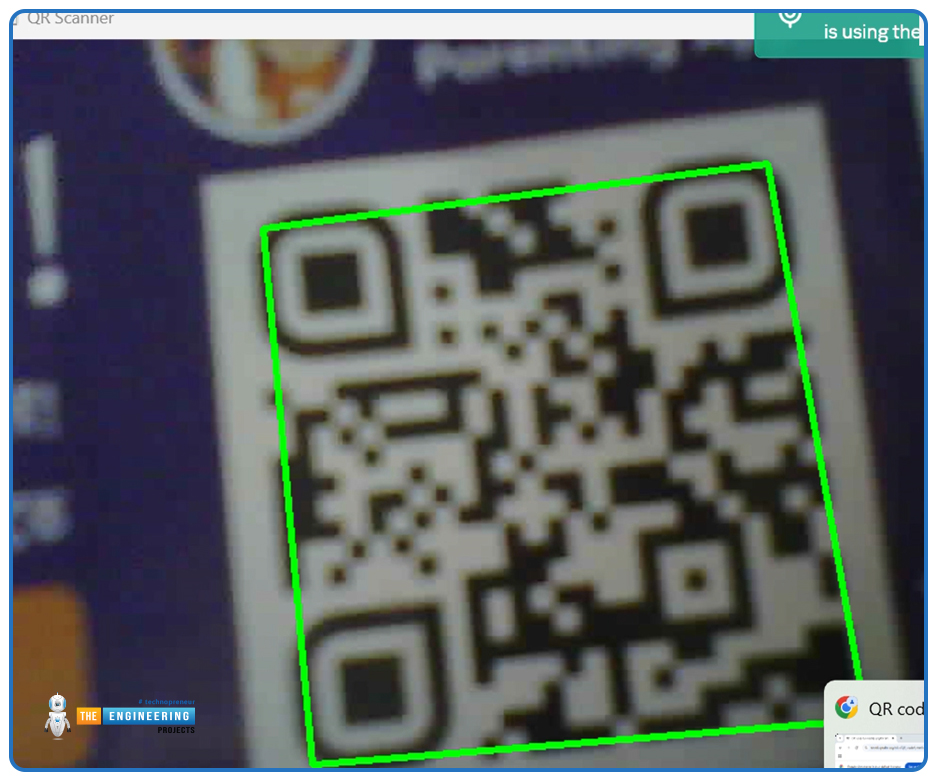
Hello friends! How are you today? Today we're going to discuss a project that is interesting and also useful in our everyday life. You see QR codes almost everywhere, right? They are printed on almost every product's package, leaflets, newspapers, and brochures. Perhaps, you often use QR code scanners on your mobile device. What about making such a program by yourself? Yes! That is exactly what we are going to do today. We will make a QR code scanner using the ESP32-CAM. For image processing, we will use the OpenCV library. If you’ve ever wanted to create a real-time QR code scanner using a low-cost, wireless camera module, you’re in the right place. In this tutorial, we’ll walk through setting up an ESP32-CAM to stream video and using OpenCV to detect and decode QR codes in real time. The ESP32-CAM is a powerful yet affordable development board that combines the ESP32 microcontroller with an integrated camera module, making it an excellent choice for IoT and vision-based applications. Whether you're building a wireless security camera, a QR code scanner, or an AI-powered image recognition system, the ESP32-CAM provides a compact and cost-effective solution. One of its standout features is built-in WiFi and Bluetooth connectivity, allowing it to stream video or capture images remotely. Despite its small size, it packs a punch with a dual-core processor, support for microSD card storage, and compatibility with various camera sensors (such as the OV2640). However, since it ...
Hello, dear tech savvies! We hope everything is going fine with you. Today we’re back with another interesting project. Do you ever wonder how amazing it would be to have a text reader that would be able to read texts from pictures and videos? Think about a self-driving car that can read the road signs meticulously and go to the right direction. Or imagine an AI bot that can read what is written on images uploaded to social media. How nice it would be to have such a system that will be able to read vulgar posts and filter them even when they are in picture format? Or imagine a caregiver robot that can read the medicine bottle levels and give medicines to the patients always on time. Now you understand how important it is for AI solutions to recognize texts, right? Today, we are going to do the same task in this project. The main component of our project is an ESP32-CAM. We will integrate it with the OpenCV library of Python. The Python code will read text from the video feed and show the text in the output terminal. The ESP32-CAM is a powerful yet affordable development board that combines the ESP32 microcontroller with an integrated camera module, making it an excellent choice for IoT and vision-based applications. Whether you're building a wireless security camera, a QR code scanner, or an AI-powered image recognition system, the ESP32-CAM provides a compact and cost-effective solution. One of its standout features is built-in WiFi and Bluetooth connectivity, allowing it to ...
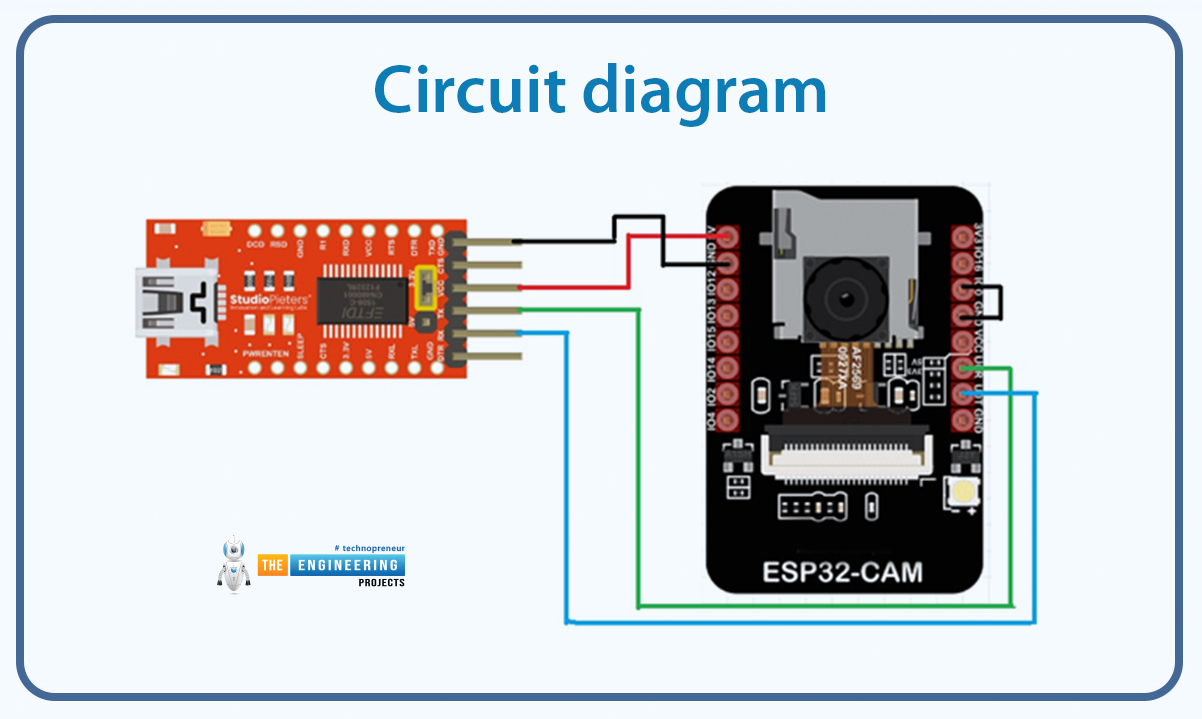
Hello friends. We hope you are doing fine. The world is full of colours. Isn’t it? We humans can see and differentiate the colours very easily. But teaching robots and AI apps about colours is a real challenge. With the advancement of computer vision and embedded systems, this task has become easier than before. Today, we are going to make an RGB colour identifier using the ESP32-CAM. This project combines the power of OpenCV with the ESP32-CAM module to create a simple but effective system for detecting and tracking basic colors in real time. This system consists of an ESP32-CAM module acting as a live-streaming camera server and a Python-based computer vision application running on a remote computer. The Python application fetches images from the ESP32-CAM, processes them using OpenCV, and detects objects of specific colours (red, green, and blue) based on HSV filtering. The following is the circuit diagram for this project: Fig: Circuit diagram If it is your first project with any board of the ESP32 series, this part of the tutorial is for you. you need to do the board installation. You may also need to install the CP210x USB driver. If ESP32 boards are already installed in your Arduino IDE, you can skip this installation section. Go to File > preferences, type https://dl.espressif.com/dl/package_esp32_index.json and click OK. Fig: Board Installation Fig: Board Installation Now select the correct path to the library, click on the library folder and press open. Connect the ...
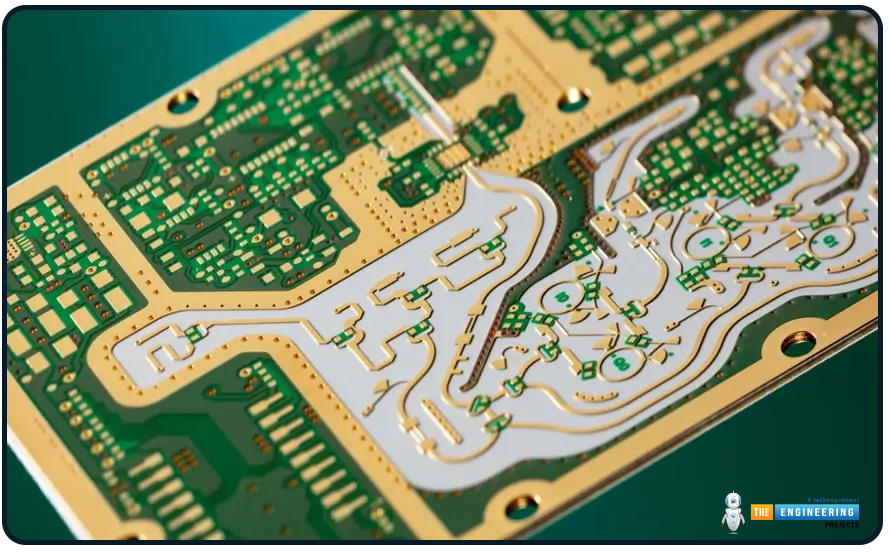
Hi readers! Welcome to this in-depth look at high-frequency PCB design. When dealing with radio frequency, microwave, or high-speed digital signals, you understand that the choice of material can ruin or redeem your design. FR-4 may be wonderful for typical-purpose PCBs, but it tends to lack in sophisticated applications. That is where Rogers PCB materials step in. Rogers materials are laminates of high-performance that Rogers Corporation has made specifically for employment in RF and microwave circuit design applications. Their substrates contain low dielectric loss, reliable dielectric constants, and less moisture absorption. These characteristics are important for signal integrity, in particular, in high-frequency situations when even small changes can result in decreased performance. Apart from outstanding electrical performance, Rogers materials show superior thermal reliability and can be relied on in stressful environments like aerospace, automotive, radar, and high-speed communication systems. Rogers laminates have improved impedance control, decreased signal distortion, and increased overall dependability compared to standard FR-4 materials. From 5G antennas and automotive radar systems to aerospace communication and satellite devices, Rogers materials are trusted globally for their ability to handle high-speed signals with extreme precision. In this article, we’ll explore what Rogers PCB material is, why it's preferred for RF applications, its key properties, types, ...